For more information or quick response,welcome to contact [email protected] or WhatsApp:+8618059761903
Global buyers need more than attractive Paper Cups in 2026. They need dependable performance across climates, supply chains, and serving conditions. A cup may look strong in a factory sample, yet soften after hours in a humid warehouse. That small failure can damage a brand’s reputation.
Dr. Martin Hocking, a widely cited researcher in disposable food packaging, offers a useful perspective: “A paper cup is not simply paper; its coating shapes much of its environmental performance.” This principle remains important when comparing double-wall, ripple-wall, and single-wall designs. Buyers should examine board quality, barrier materials, rim strength, printing safety, and leak resistance. They should also request current food-contact documents, factory test results, and traceable certifications.
The best choice depends on use. A 4-ounce cup for espresso needs different insulation than a 20-ounce takeaway cup. Hot coffee, iced tea, soup, and dairy drinks create different technical demands. Importers should test samples with real beverages, not water alone. That detail is easy to overlook.
Sustainability claims also require caution. “Recyclable” may depend on local collection systems and specialist processing facilities. A certified compostable cup may not compost in ordinary household conditions. The market is improving, but it is not perfectly transparent. Some suppliers still provide vague coating descriptions or outdated certificates.
This guide examines what global buyers should verify before ordering Paper Cups in 2026. It considers product safety, manufacturing consistency, customization, shipping practicality, and total cost. The cheapest carton may become expensive after leakage, rejected shipments, or customer complaints. Reliable purchasing begins with evidence, not promises.
For global buyers in 2026, paper cup selection should begin with the drink, not the decoration. Single-wall cups suit water, juice, and short takeaway service. They are lighter and usually cheaper. Double-wall cups provide better insulation for hot coffee and tea. Ripple-wall cups add grip and reduce the need for a separate sleeve. They also use more material. No cup wins every route.
A 2024 assessment by Grand View Research valued the global paper cups market at more than USD 10 billion and forecast continued growth through the decade. That expansion increases pressure on buyers to compare performance, not only price. Smithers’ research on paper-based packaging also highlights rising demand for recyclable and fiber-based formats. However, a fiber cup is not automatically easy to recycle. Its coating, food residue, local collection system, and mill technology all matter. Water-based coatings may fit some recycling systems, while compostable linings require suitable industrial facilities.
For hot beverages, buyers should request leak, heat, rim, and compression testing. Ask for the cup’s grammage, coating type, food-contact documentation, and stacking performance. For cold drinks, moisture resistance is critical. A weak outer surface can soften inside a delivery bag. I have seen specifications look excellent until condensation exposes the real problem. That is why small pilot orders matter. Buyers should test cups for at least several service conditions, including long transport and uneven storage. Sustainability claims need evidence, not attractive wording. The most practical choice is usually the lightest cup that safely performs its intended job.
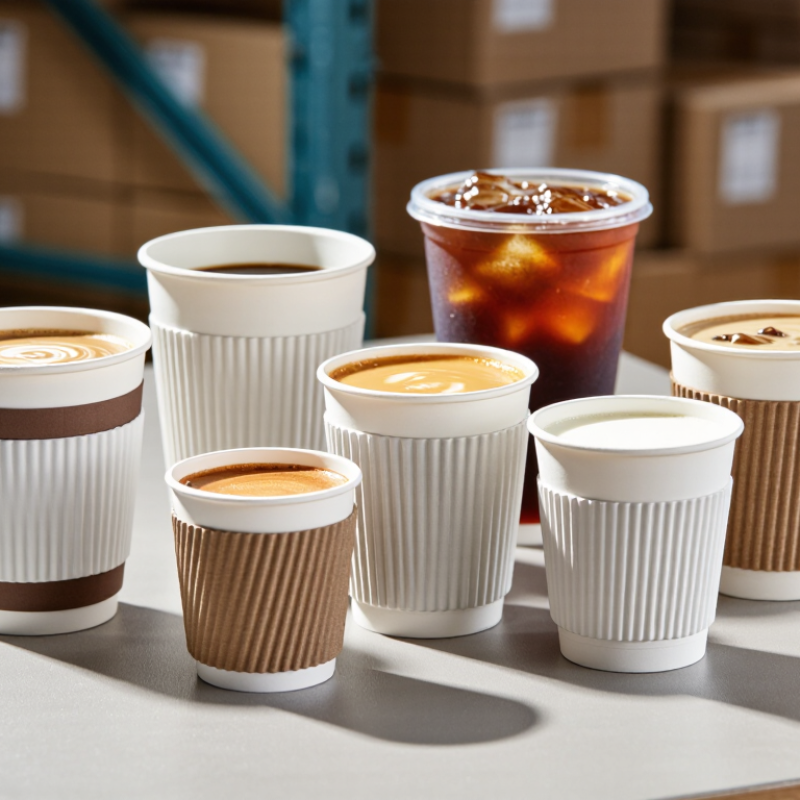
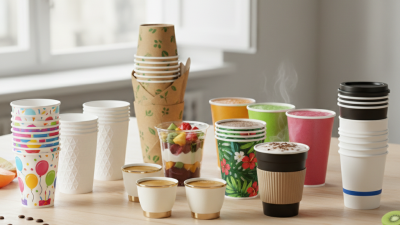
Common paper cup formats and their typical nominal capacities for different beverage and food applications. Actual capacities vary by supplier, market, and filling requirements.
Smaller cups are commonly used for espresso and sampling, insulated double-wall or ripple-wall cups are preferred for hot takeaway drinks, while larger PE- or water-based-coated cups are widely used for cold beverages and soup.
What Are the Best Paper Cups for Global Buyers in 2026?
Material selection starts with the cup’s use, not a sustainability slogan. Virgin paperboard offers reliable strength for hot coffee and long transport. Recycled fiber can reduce resource use, but food-contact compliance must be verified for each market. A heavier board is not always better. It may increase material consumption without improving performance.
The lining controls leakage, heat resistance, and end-of-life options. Conventional polyethylene linings remain practical and widely accepted. Water-based coatings may support easier fiber recovery, but performance varies with temperature and storage time. Plant-based PLA linings can suit certified industrial composting systems. They are not automatically home compostable. That distinction is often missed.
Look for documented testing, including leak resistance, rim strength, and hot-liquid stability. Ask for migration reports and evidence of responsible fiber sourcing. Relevant sustainability systems may include FSC or PEFC certification, while compostable products should meet recognized standards such as EN 13432 or ASTM D6400. Local waste infrastructure matters more than a printed claim. A compostable cup has limited value where composting facilities are unavailable. The industry still has gaps. Some claims sound precise but provide little information about actual disposal. Global buyers should request current certificates, batch traceability, and clear recycling guidance before approving a shipment.
What Are the Best Paper Cups for Global Buyers in 2026?
Global buyers should compare cup quality through measurable details, not appearance alone. A reliable cup has even walls, a smooth rim, and a stable base. Check the paperboard weight and coating consistency across several production samples. One attractive sample proves very little. Ask for batch records, material specifications, and independent test reports. These documents make supplier claims easier to verify.
Safety requires careful attention to food-contact materials. Request evidence for overall migration testing, intended temperature limits, and coating suitability. Printing inks should remain away from the inner surface. Odor matters too. A strong chemical smell after opening the carton deserves investigation. Paper alone is not enough. Storage conditions can also affect cleanliness and performance. Confirm how cups are packed, sealed, and protected during shipment.
Performance should be tested in realistic conditions. Fill cups with hot drinks, cold beverages, and liquids containing ice. Observe leakage, rim comfort, softening, and condensation over time. Test the cups on the buyer’s filling equipment when possible. A cup may perform well by hand but jam on a fast production line. I have seen samples fail after repeated stacking and handling. That result is inconvenient, but useful. It shows why small trials should include transport simulation, not only visual inspection. Buyers should record every weakness, even minor ones, before approving a large order.
A practical comparison framework for evaluating paper cups by material quality, food-contact safety, thermal performance, leak resistance, sustainability, and supply requirements.
| Evaluation Dimension | Basic Commercial Grade | Better Performance Grade | High-Performance Buyer Target | What Global Buyers Should Verify |
|---|---|---|---|---|
| Common Capacity Options | 4, 6, 8, 10, 12, 16, and 20 US fl oz are widely used formats. | Popular sizes are supplied with consistent fill volume and compatible lids. | Size range includes hot-drink, cold-drink, tasting, and portion-control formats. | Confirm whether the stated capacity is brim-full or the recommended fill volume. Check dimensional compatibility with lids and dispensing equipment. |
| Paperboard Basis Weight | Approximately 180–250 g/m²; suitable for lighter-duty applications. | Approximately 250–350 g/m²; improved stiffness and handling. | Approximately 300–380 g/m² or reinforced multi-layer construction for demanding use. | Request the paperboard specification, moisture content, stiffness data, and production tolerances. Higher grammage alone does not guarantee better cup performance. |
| Cup Wall Construction | Single-wall structure for short service and standard beverages. | Double-wall or air-gap structure for better hand protection and insulation. | Double-wall, ripple-wall, or reinforced construction for extended hot-drink service. | Compare wall thickness, insulation performance, stacking behavior, and whether a separate sleeve is required. |
| Barrier Coating | Single-sided polyethylene coating, commonly around 10–20 g/m². | Optimized polyethylene or aqueous barrier coating selected for the beverage type. | Application-specific barrier system with validated resistance to heat, oil, acidity, and moisture. | Confirm coating type, coating weight, side of application, odor, taste neutrality, and compatibility with the intended recycling or composting route. |
| Hot Beverage Temperature | Suitable for typical hot beverages served below approximately 85°C when correctly designed. | Designed for repeated service conditions around 85–95°C, subject to product validation. | Validated for the buyer’s beverage, filling temperature, holding time, and transport conditions. | Ask for leak, delamination, deformation, and surface-temperature test results using the actual beverage temperature and exposure time. |
| Leak and Seam Resistance | No visible leakage under short-duration standard use. | Seam and bottom construction tested with hot and cold liquids for at least 30 minutes. | Validated against the buyer’s complete use cycle, including filling, stacking, transport, and extended holding. | Use a lot-sampling plan. Check side-seam bonding, bottom curl, pinholes, coating continuity, and leakage after thermal conditioning. |
| Food-Contact Safety | Supplier declaration covering the paperboard, coating, inks, adhesives, and intended food-contact conditions. | Declaration supported by migration, odor, taste, and composition documentation. | Full compliance package for the destination market, including applicable food-contact regulations and laboratory reports. | For Europe, review applicable requirements such as Regulation (EC) No. 1935/2004 and relevant national rules. For the United States, verify compliance with applicable FDA food-contact requirements, including 21 CFR provisions where relevant. |
| Printing and Ink Safety | External printing only, with controlled ink coverage. | Low-odor printing with documented ink and adhesive suitability for food packaging. | Printed design validated for rub resistance, condensation, stacking, and the destination market. | Ensure ink does not contact the beverage or cup interior. Request declarations for inks, varnishes, adhesives, and recycled fiber content where applicable. |
| Recyclability | May be recyclable where local paper mills accept coated food-service cups. | Uses a coating and fiber combination supported by the target market’s collection and pulping infrastructure. | Recyclability is demonstrated through relevant local or industry testing rather than only through a material claim. | Recyclability depends on collection systems, cup sorting, repulping capability, and local regulations. Confirm the actual end-of-life route in each target country. |
| Compostability Claims | No compostability claim unless the complete cup has been tested and certified. | Uses a compostable coating option where industrial composting is available. | Complete cup, ink, adhesive, and coating are assessed under the relevant certification or testing scheme. | Do not treat a plant-based or PLA coating as automatically compostable. Industrial compostability commonly requires suitable facilities and verification against standards such as EN 13432, ASTM D6400, or ASTM D6868, as applicable. |
| Rim and Lid Fit | Standard rolled rim with a matching lid profile. | Consistent rim diameter and improved sealing during carrying and delivery. | Validated fit across the complete cup-and-lid system, including condensation and temperature changes. | Test lid retention, drinking aperture alignment, splash resistance, and dimensional tolerance using production samples rather than drawings alone. |
| Storage and Shelf Conditions | Dry, clean, odor-free indoor storage away from direct sunlight and chemicals. | Sealed packaging with controlled humidity and protection against compression during shipment. | Documented storage limits, packaging integrity, pallet stability, and transport performance for international shipping. | Paper products absorb moisture. Confirm recommended temperature and relative humidity limits, carton protection, container loading method, and first-in-first-out inventory control. |
| Quality Control and Sampling | Visual inspection and basic dimensional checks. | Incoming-material inspection, in-process checks, leak testing, and finished-goods sampling. | Documented quality plan covering dimensions, grammage, coating, print, seams, leakage, compression, and traceability. | Agree on specifications, acceptable quality limits, test methods, sample size, defect classifications, and corrective-action procedures before mass production. |
| Best Use Case | Short-duration beverage service with cost-sensitive purchasing priorities. | Daily cafés, offices, takeaway service, and moderate delivery use. | High-volume food-service operations, long-distance distribution, premium presentation, and demanding hot or cold beverage applications. | Select the cup based on total performance and lifecycle cost—not paper weight alone. Product testing should reflect the real beverage, filling process, and distribution environment. |
Buyer note: The ranges above are typical purchasing benchmarks, not universal legal limits or guarantees. Final acceptance should be based on production samples, destination-market regulations, documented test methods, and the complete cup, lid, beverage, and logistics system.
For global buyers, certification should be checked before price. FSC or PEFC Chain of Custody can verify responsible fiber sourcing. ISO 22000 or BRCGS Packaging Materials can support food-contact risk controls. However, a certificate is not proof of every environmental claim. Buyers should verify its scope, expiry date, factory address, and product coverage. Laboratory reports should also confirm coating safety, leakage resistance, and heat performance.
Cost needs a wider calculation. The cheapest quotation may become expensive after tooling, testing, inland transport, and rejected cartons. FAO’s Global Forest Products Facts and Figures 2023 recorded roughly 420 million tonnes of global paper and paperboard production. Fiber availability is large, but quality, recycled content, and local compliance still affect pricing. A practical request should show cup weight, rim diameter, coating type, packing quantity, and acceptable defect limits. Small details matter.
Supply chains deserve equal attention. UNCTAD’s Review of Maritime Transport 2024 states that about 80% of global merchandise trade by volume moves by sea. Port delays can therefore disrupt seasonal cup programs. Buyers should compare at least two qualified production regions, keep approved samples, and request realistic lead times. I would also test cartons after humid storage, not only in a dry factory. That extra step costs money. It may prevent a larger failure.
Check the paper source and barrier coating next.
The Confederation of European Paper Industries reported an 82.5% paper recycling rate in Europe in 2023. However, recyclability depends on local collection systems and coating separation. Ask for food-contact declarations, migration test results, and batch traceability. Do not accept vague claims such as “eco-friendly.” Request technical documents from an accredited laboratory.
Then test the cup in real conditions.
Fill it with the intended beverage, hold it for thirty minutes, and check the seam, rim, odor, and surface temperature. Test cartons after humid storage and transport vibration. The Smithers report, The Future of Global Packaging to 2028, identifies sustainability, material efficiency, and supply-chain resilience as major packaging priorities. Yet lower material use can weaken stiffness. That trade-off is easy to miss.
Compare delivered cost, not only unit price.
Include tooling, printing, inner packaging, freight, duty, inspection, and rejected units. Global buyers should also confirm production capacity and backup materials. A perfect cup does not exist. The best choice is the one that performs consistently, meets destination requirements, and remains practical after shipping.