For more information or quick response,welcome to contact [email protected] or WhatsApp:+8618059761903
Choosing the right Pulp Lunchbox requires more than comparing prices or color options. Global buyers must examine material safety, structural performance, production consistency, and end-of-life claims. A lunchbox may look sturdy in a product photograph, yet soften when filled with hot curry, oily rice, or soup. Humidity during sea transport can create another problem. Small details matter.
The OECD’s Global Plastics Outlook reported that the world generated 353 million tonnes of plastic waste in 2019, while only 9% was successfully recycled. This pressure is encouraging foodservice brands to explore molded-fiber packaging. Smithers’ industry analysis on sustainable packaging also identifies fiber-based formats as an important growth area. However, pulp is not automatically sustainable. The result depends on recycled content, responsible fiber sourcing, additives, manufacturing energy, and local disposal systems.
This guide explains how buyers can assess a Pulp Lunchbox with practical and evidence-based criteria. Check food-contact documentation, migration testing, leak resistance, compression strength, and performance after refrigeration or reheating. Review whether “compostable” means industrial composting or home composting. The difference is significant. Buyers should also request certificates, batch records, factory audit results, and realistic samples before placing large orders. ISO 18606 and EN 13432 can help evaluate compostable packaging claims, but regional requirements still vary. There is no universal best option. A box that performs well in Singapore may fail in a cold European warehouse. That assumption deserves testing. A reliable choice balances safety, usability, verified environmental claims, and total delivered cost.
For global buyers, “pulp” is not one material. It may mean molded fiber from bagasse, bamboo, wheat straw, or recovered paper. Each source changes stiffness, texture, color, and moisture behavior. Virgin agricultural fiber often gives a cleaner appearance. Recycled fiber can support circular goals, but its surface may look less uniform. Ask for the fiber source, additives, food-contact documentation, and coating details. Uncoated pulp suits dry foods and short service periods. Water or grease barriers may be necessary for soups, sauces, or oily meals.
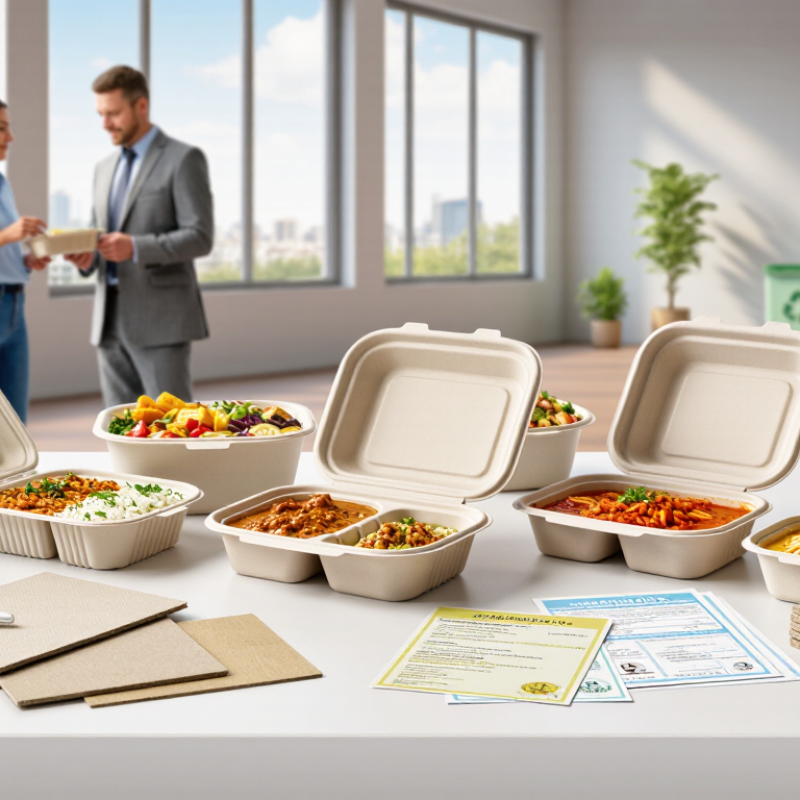
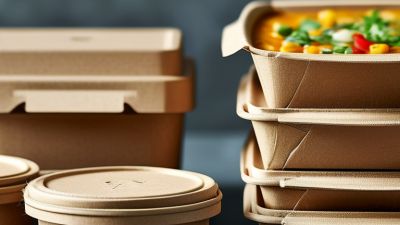
Format should follow handling, not fashion. A hinged clamshell protects quick meals and simplifies takeaway service. A tray with a separate lid works better for compartmented meals and retail display. Bowls suit rice, salads, and moderate liquids, while plates fit dry portions. Check rim strength, ventilation, nesting, and lid fit with real samples. A lunchbox that stacks well can reduce warehouse volume and shipping damage. Small details matter. Still, a neat sample can fail after thirty minutes of heat and steam. Often missed.
Define the meal before choosing the box. Dry snacks need different protection from hot noodles, chilled fruit, or oily rice. For school meals, prioritize secure closures, rounded edges, and easy opening. For catering, prioritize speed, stacking, and consistent portion capacity. For export orders, confirm dimensions, temperature limits, shelf-life expectations, and destination-market requirements. Do not rely only on a supplier’s general certificate. Request reports matching the exact material, coating, and production site. Buyers sometimes specify “compostable” too early. That label may not describe local disposal conditions.
For global buyers, food safety starts with the pulp itself, not the printed design. Choose containers made from documented food-contact fibers, process water, and additives. EU Regulation (EC) No. 1935/2004 requires materials to avoid transferring harmful substances into food. In the United States, the FDA Food Code 2022 advises keeping cold food at 5°C or below and hot food at 57°C or above. A lunchbox should protect these limits during delivery, not only inside a factory.
Moisture resistance needs measurable evidence. Ask for Cobb water-absorption results under ISO 535 or TAPPI testing methods. A greasy curry can soften an untreated fiber wall within minutes. Look for stable seams, a tight lid fit, and resistance after contact with sauces. However, a very heavy barrier coating may reduce recyclability or complicate local processing. This trade-off is often ignored. I would request test samples with soup, oil, and condensation before approving a large order.
Temperature testing should copy real use. Test chilled salads, hot rice, and microwave reheating separately. Record wall deformation, leakage, odor, and surface temperature after 15, 30, and 60 minutes. The UNEP 2023 report Turning off the Tap identifies packaging as roughly 40% of global plastic production, increasing pressure for fiber alternatives. Yet “pulp” does not automatically mean safe or sustainable. Suppliers should provide migration documentation, batch traceability, and performance data from independent laboratories. Some results may look acceptable on paper, but field handling can be messier.
How to Choose the Best Pulp Lunchbox for Global Buyers?
A pulp lunchbox may look sustainable, but appearance proves little. Ask suppliers to identify the fiber source, coating, inks, and additives. Recycled fiber can reduce virgin material use, while agricultural residue may lower pressure on forests. Request test reports for PFAS, heavy metals, food-contact safety, and overall migration. Ask for evidence. Generic “eco-friendly” language is not enough.
Certifications should match the claim and destination market. Forest-based materials may need FSC or PEFC chain-of-custody documentation. Compostability claims should reference suitable standards, such as EN 13432 or ASTM D6400. Check whether the certificate covers the complete lunchbox, including lids, coatings, labels, and adhesives. Labels can mislead. A certified fiber body does not automatically certify the whole package. I have seen purchasing teams miss this detail during fast supplier comparisons.
End-of-life planning deserves equal attention. A lunchbox marked compostable may require an industrial composting facility, not a backyard bin. In regions without collection systems, it may still enter landfill waste. Ask for disposal guidance by country, local acceptance data, and clear consumer instructions. Also examine whether grease-resistant coatings interfere with pulping or composting. That gap matters. A slightly less ambitious claim, supported by local infrastructure, can be more reliable than a perfect-sounding claim that users cannot follow.
Compare recognized compostability test windows before accepting sustainability claims. The chart shows the maximum test periods commonly specified for industrially compostable packaging under EN 13432 and ASTM D6400. These are laboratory requirements, not guaranteed real-world decomposition times.
A credible pulp lunchbox should provide independent certification, food-contact compliance documentation, clear industrial-composting instructions, and evidence that coatings, inks, adhesives, and barrier layers meet the same end-of-life requirements as the fiber body. Industrial compostability does not automatically mean home compostability or recyclability.
How to Choose the Best Pulp Lunchbox for Global Buyers?
Assess Supplier Capacity, Customization, Pricing, and Trade Terms
A reliable supplier should show more than attractive product photos. Ask for monthly capacity, mold availability, raw material sources, and current production schedules. In sourcing projects, I also request factory videos, sample cartons, and recent quality records. A supplier that answers vaguely may struggle during peak seasons. Confirm lead times for samples, mass production, and replacement orders. Small details matter.
Customization can include dimensions, compartments, surface texture, labels, and packaging. Request a physical sample before approving tooling. Check whether the lid closes firmly after refrigeration and transport testing. Confirm pulp composition, food-contact documentation, moisture resistance, and printing methods. Some specifications sound impressive but add little value. I have learned that complicated designs can increase defects and cleaning concerns.
Compare prices using the same specification. Include tooling, packaging, inspection, inland transport, and export charges. A low quote can be misleading. Ask whether the price changes with order volume or material costs. Clarify minimum order quantity, payment stages, currency, and production deposit. Trade terms also need careful review. Confirm the agreed Incoterm, loading port, shipping documents, insurance responsibility, and delivery schedule. Use a pre-shipment inspection when the order is significant. It costs money, but missed defects cost more. Suppliers may promise flexibility, yet written terms remain more dependable.
How to Choose the Best Pulp Lunchbox for Global Buyers?
In real purchasing work, a sample can look perfect and still fail during transport. Request several pulp lunchboxes, not one. Check the lid fit, corner strength, surface smoothness, and resistance to warm food. Fill each sample with water for 30 minutes. Then test it with oily meals. Record leakage, warping, odor, and stacking performance. A slightly uneven edge may reveal weak mold control.
Compliance documents need careful review. Ask for food-contact test reports, material declarations, and applicable compostability evidence. Confirm the testing laboratory, report date, sample description, and tested material. Documents should match the actual product, not an older design. Requirements differ between markets. Do not accept vague claims such as “eco-friendly” without supporting evidence. I once overlooked a coating detail, and the replacement documents delayed approval. That mistake was avoidable.
Packaging and delivery reliability deserve equal attention. Inspect the inner bag, carton strength, moisture protection, and pallet arrangement. Ask for carton dimensions, gross weight, loading photos, and drop-test results. Weak cartons can damage dry pulp products before they reach a warehouse. Request a production schedule with material preparation, molding, inspection, and dispatch dates. Compare the promised lead time with previous shipment records. Leave a practical buffer for port congestion and reinspection. Delays happen. A supplier’s response matters more than a perfect promise. Test, document, and question every gap.
Practical supplier-evaluation matrix for molded-fiber lunchboxes. All values are purchasing benchmarks or document requirements and should be confirmed with the selected supplier before ordering.
| Evaluation Area | Verification Point | Recommended Acceptance Criteria | Evidence to Request | Risk if Not Verified | Priority |
|---|---|---|---|---|---|
| Sample Verification | Material composition | Molded paper pulp or bagasse fiber clearly specified; no undisclosed plastic film or PFAS-based grease barrier. | Material specification, declaration of composition, and representative production sample. | Unexpected recycling restrictions, odor, or food-contact concerns. | High |
| Dimensions and fit | Length, width, height, lid fit, and compartment volume remain within the agreed tolerance, normally ±2–3 mm for molded-fiber items. | Approved drawing, dimensional inspection report, and pre-production sample. | Loose lids, stacking problems, and incompatibility with automated filling lines. | High | |
| Performance testing | No visible leakage or structural collapse during the agreed hot-food, oily-food, and condensation tests. | Test protocol, test temperature and duration, photographs, and signed sample-approval record. | Softening, warping, leakage, or customer complaints during normal use. | High | |
| Odor, appearance, and cleanliness | Neutral odor, even forming, clean edges, no mold, stains, loose fibers, or visible foreign matter. | Golden sample, visual inspection checklist, and batch-quality photographs. | Rejection at incoming inspection and poor consumer perception. | Medium | |
| Compliance Documents | Food-contact declaration | Declaration identifies the product, intended food types, temperature limits, and applicable destination-market rules. | Signed declaration of compliance and current technical data sheet. | Customs delays, retailer rejection, or inability to demonstrate legal compliance. | High |
| EU market documentation | Documentation references Framework Regulation (EC) No 1935/2004 and, where applicable, GMP Regulation (EC) No 2023/2006. | Supplier declaration, supporting migration results, and traceability procedure. | Non-compliant shipment or inability to satisfy importer due diligence. | High | |
| United States market documentation | Applicable FDA food-contact basis is identified; fiber or paper components are evaluated under the relevant provisions, such as 21 CFR Part 176 where applicable. | Regulatory assessment, supplier declaration, and laboratory reports linked to the exact product. | Import holds, customer claim exposure, or relabeling costs. | High | |
| Restricted substances | Testing covers heavy metals, primary aromatic amines where relevant, PFAS, total fluorine screening where requested, and other destination-market restrictions. | Independent laboratory report issued within the previous 12 months for the same material and finish. | Regulatory nonconformance and product withdrawal. | High | |
| Packaging | Primary and secondary protection | Products are protected from moisture, compression, dust, and abrasion during normal inland and sea transport. | Packing specification, carton photos, pallet pattern, and drop or compression test record where required. | Deformed lids, crushed cartons, and unusable inventory. | High |
| Carton efficiency | Carton dimensions, gross weight, and units per carton are fixed before quotation; target carton utilization is approximately 80% or higher without over-compression. | Final packing list, carton specification, loading plan, and confirmed pallet dimensions. | Higher freight cost, unstable pallets, and inaccurate landed-cost calculations. | Medium | |
| Labeling and traceability | Each carton shows item code, quantity, production lot, country of origin, net/gross weight, and handling marks where required. | Artwork proof, carton label sample, lot-coding format, and packing-list template. | Receiving errors and difficulty tracing a quality issue. | Medium | |
| Delivery Reliability | Production lead time | Supplier provides a written lead-time range, including mold approval, production, inspection, and packing; changes require advance notice. | Order schedule, production milestones, capacity statement, and escalation contact. | Missed launch dates and emergency freight charges. | High |
| On-time shipment performance | Use a documented target of at least 95% on-time shipment performance over the previous six to twelve months. | Anonymized shipment history, order-confirmation records, and explanation of late orders. | Unreliable replenishment and increased safety-stock requirements. | High | |
| Pre-shipment inspection and corrective action | Inspection covers quantity, dimensions, appearance, packaging, and documents; nonconformities have a written corrective-action deadline. | Inspection checklist, sample report, defect classification, corrective-action report, and shipment release record. | Defects discovered only after arrival and costly claims handling. | High |