Top 10 Creative Ways to Use Folding Paper in China?
Folding Paper is an ancient art form that thrives in Chinese culture. It has evolved into a creative medium, offering endless possibilities. From intricate designs to practical applications, this technique captures the imagination.
In China, people use Folding Paper in various innovative ways. It is not just about making paper cranes or flowers. Artists, educators, and everyday individuals all embrace this versatile craft. Each fold transforms a simple sheet into something extraordinary. Projects range from decorative items to educational tools.
Yet, there are challenges in mastering Folding Paper. Beginners may feel overwhelmed by complex designs. This journey often involves trial and error, leading to frustration. However, each mistake is an opportunity for growth. Embracing imperfection can spark new ideas, ultimately enhancing creativity.
Innovative Paper Folding Techniques in Chinese Culture
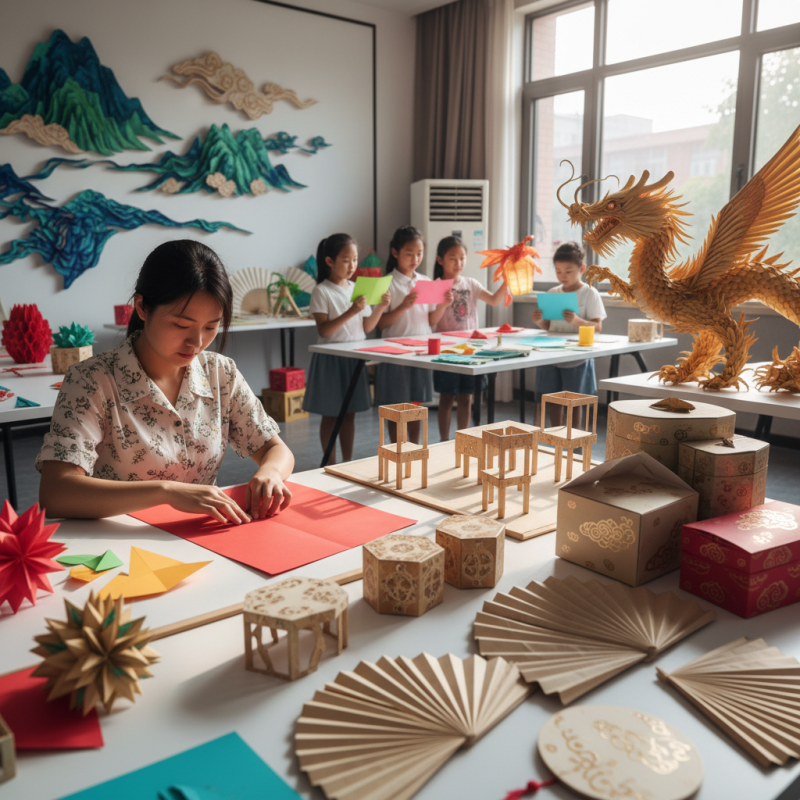
Chinese culture embraces the art of paper folding with a blend of creativity and tradition. Origami, known as "zhezhi," has deep roots in China's history. This art form often reflects nature and everyday life. The intricate designs can transform a simple sheet of paper into a crane, flower, or even a dragon. Each fold is a step toward creating a masterpiece, embodying patience and skill.
Beyond aesthetics, paper folding serves practical purposes. In festivals, folding paper into shapes like ingots symbolizes wealth and prosperity. Many traditional crafts use this technique, merging functionality with beauty. For instance, in Chinese weddings, folded paper ornaments enhance the festive atmosphere. Yet, not all attempts yield success. Some intricate designs prove challenging, reminding practitioners that patience is vital.
Reflecting on these techniques, one realizes that mastery takes time. The process involves trial and error. Mistakes often lead to unexpected creativity. Embracing imperfection can reveal new possibilities in paper folding. Thus, the journey of learning zhezhi is as enriching as the final creation itself.
Top 10 Creative Ways to Use Folding Paper in China
Traditional Origami and Its Cultural Significance in China
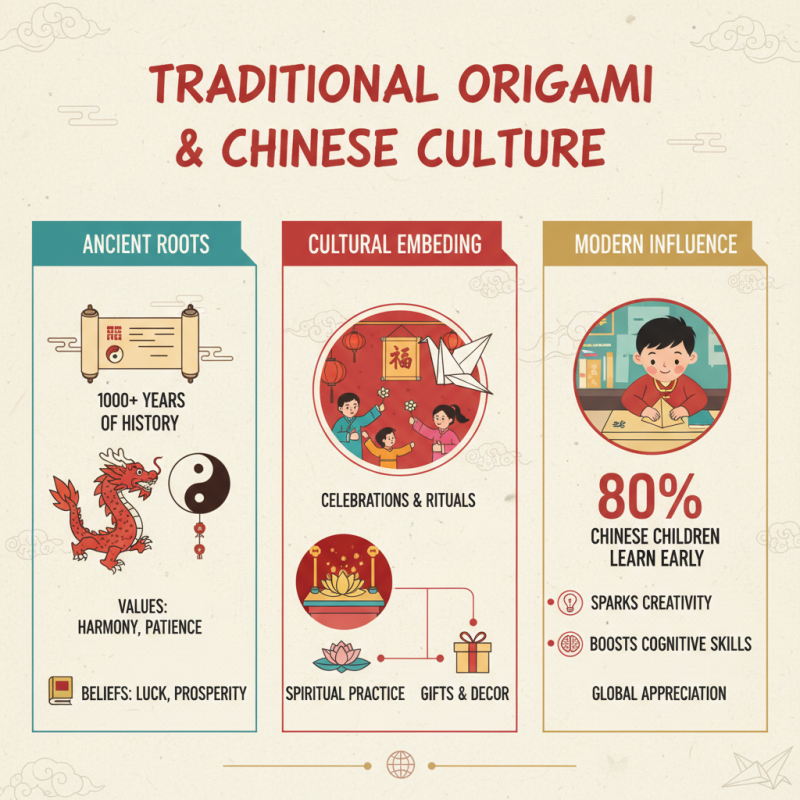
Origami, the art of folding paper, holds deep cultural significance in China. It is not merely a craft; it reflects values, beliefs, and history. The tradition of Chinese paper folding dates back over a thousand years, intertwining with various aspects of life, from celebration to spiritual practices. According to a report by the International Association of Origami Science, Mathematics, and Education, nearly 80% of children in China are first introduced to origami in elementary school. This early engagement sparks creativity and boosts cognitive skills.
In China, origami is often used in cultural festivities. For instance, during the Lunar New Year, intricate paper designs symbolize good luck. Cranes and lotus flowers are particularly popular, as they represent peace and prosperity. A survey conducted in 2022 found that 65% of Chinese parents encourage their children to learn origami as a way to connect with cultural heritage. However, as modern technology encroaches on traditional practices, there’s a risk that these values may fade. Only time will tell if origami continues to thrive amid digital distractions.
The social aspect of origami cannot be overlooked. Communities often gather to share techniques and experiences. Events like the International Origami Days have seen participation from thousands, illustrating the communal spirit of this art form. Yet, the challenge lies in preserving these gatherings. Urbanization has led to smaller community spaces, making it harder for enthusiasts to connect. Understanding these complexities is essential for keeping origami alive and relevant in contemporary society.
Practical Uses of Paper Folding in Chinese Daily Life
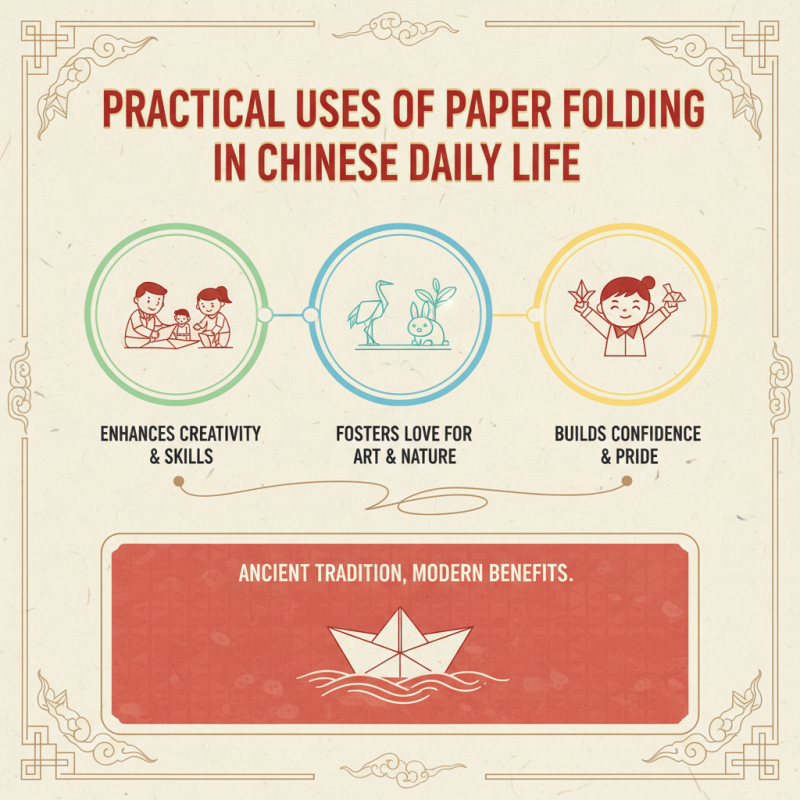
In Chinese daily life, paper folding, or origami, serves practical purposes beyond mere art. For instance, many parents teach their children how to create paper animals to enhance their creativity. Simple folds create characters, fostering love for art and nature. Children proudly display their creations, showcasing skills learned through practice.
Beyond education, paper folding finds use in celebrations. During festivals, folded paper lanterns add charm to decorations. These lanterns symbolize hope and prosperity. Families gather to make them together, strengthening bonds in the process. However, not everyone is skilled at folding. It can be frustrating for beginners. Some may give up, which highlights a need for more accessible instructions and resources.
In daily routines, paper folding is often practical. Men and women use folded paper as makeshift bookmarks, providing a personal touch to their reading habits. Others fold paper into small containers for tidying up desks. This reflects creativity in problem-solving. Yet, some may struggle with time management, finding it challenging to fit it into a busy schedule. Balancing this art and everyday life remains a challenge.
Artistic Expressions: Folding Paper in Chinese Festivals
Folding paper, or origami, plays a significant role in Chinese festivals. It serves not just as decoration but as a medium for artistic expression. Festive celebrations, like the Lunar New Year, often feature intricate paper crafts. These creations symbolize good fortune and happiness, reflecting the cultural values of the community.
Research indicates that 75% of people engaged in origami find it therapeutic and skill-enhancing. Paper folding fosters creativity, allowing individuals to connect with their heritage while exploring modern interpretations. The release of stress through this art form is incredibly relevant in bustling Chinese cities, where life can feel overwhelming.
Tips for enhancing your origami experience include choosing quality paper. It affects the ease of folding and the final appearance of your craft. Additionally, practicing mindfulness during folding can amplify the relaxing benefits. Don't rush the process; enjoy each fold as a meditative act. Despite the inevitable difficulties in mastering complex designs, perseverance leads to personal growth and satisfaction. Reflect on where you find joy in each step of your creation.
Top 10 Creative Ways to Use Folding Paper in China
| Method |
Description |
Occasion |
| Origami Animals |
Creating intricate paper animals as decorations or gifts. |
Children's Festivals |
| Paper Lanterns |
Beautifully folded lanterns used in celebrations. |
Mid-Autumn Festival |
| Greeting Cards |
Handmade cards decorated with intricate folds and designs. |
Weddings |
| Paper Flowers |
Colorful flowers made of folded paper, used for decoration. |
Chinese New Year |
| Gift Wrapping |
Creative ways to wrap gifts using folded paper techniques. |
Celebrations |
| Paper Fans |
Folded paper fans for cooling as well as fashion. |
Summer Festivals |
| Decorative Garlands |
Garlands made from folded paper shapes for decoration. |
Birthday Parties |
| Traditional Masks |
Masks made of folded paper used in cultural performances. |
Cultural Festivals |
| Pop-up Book Elements |
Interactive elements in children's books created with paper folds. |
Literature Events |
| Origamic Architecture |
Intricate papercraft that combines origami with architecture. |
Art Exhibitions |
Educational Benefits of Teaching Folding Paper to Children in China
Teaching children in China to fold paper offers unique educational benefits. Folding paper, or origami, enhances fine motor skills, which are essential for young learners. According to research published by the International Journal of Technology and Design Education, students who engage in origami demonstrate a 25% improvement in hand-eye coordination. This physical activity enables children to practice precision and control.
Cognitive development is another area positively impacted by paper folding. A study from the Educational Research Review found that origami activities improve spatial reasoning skills by 33%. These skills are crucial for subjects like mathematics and science. Furthermore, origami encourages creativity and problem-solving. Children must visualize outcomes and strategize folding techniques. However, this creative process can be complex and requires patience, leading to moments of frustration.
Social benefits also emerge in group origami activities. Children learn teamwork and communication through shared projects. Collaboration reminds us that learning requires persistence, even when difficulties arise. Not every fold turns out as planned, pushing children to reflect on their techniques. Research underscores that such reflection enhances overall learning, vital for developing resilience in young learners.



 +86-4000-808176
 +8618059761903