For more information or quick response,welcome to contact [email protected] or WhatsApp:+8618059761903

Leave Your Message

Why Choose Greaseproof Deli Paper Bags for Your Business?

A lunch order should arrive looking as good as it did at the counter. Yet a warm sandwich can release steam, and a little oil can soften ordinary paper before the customer takes the first bite. A well-chosen Greaseproof Deli Paper Bag helps manage that everyday mess while keeping food easy to carry. The paper’s resistance to grease can reduce visible stains, though it does not make the bag leakproof or suitable for every food.

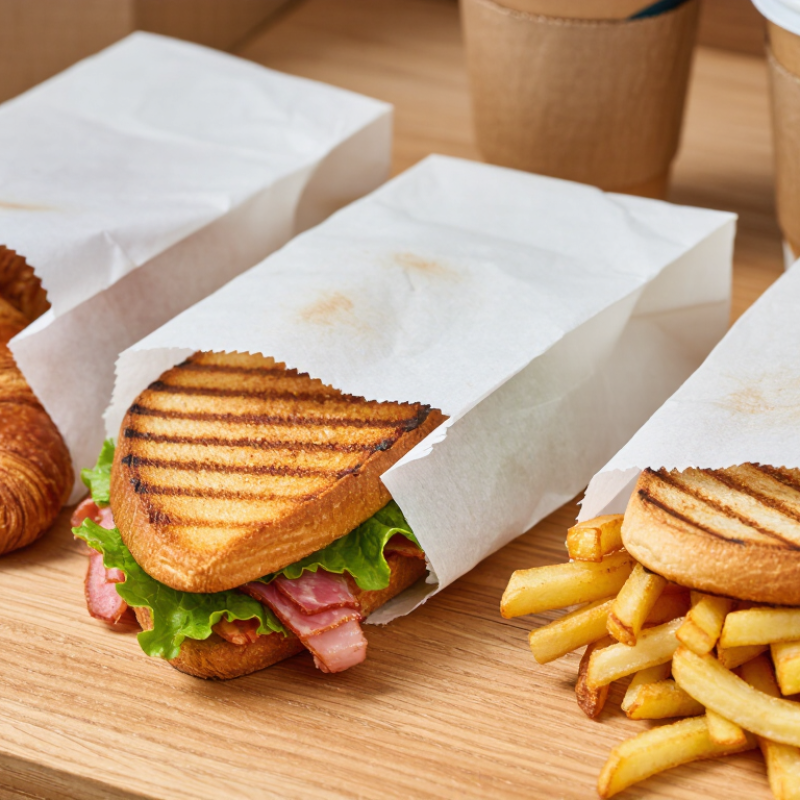
Packaging consultant Elena Brooks puts the choice simply: “Good deli packaging should protect the food without getting in the way of enjoying it.” For a busy café, that means checking how the bag performs with real menu items: a buttery croissant, a hot panini, or fries tucked inside. Feel the paper. Check the seams. Notice whether the bag stays comfortable to hold.

There is a trade-off. A heavier bag may feel sturdier, but it can also take up more storage space and cost more per order. A smaller size may reduce waste, yet squeeze a sandwich or leave little room for napkins. Test a few options during a normal service period before placing a large order. That step is easy to skip. It is also where useful details show up: handling, fit, and customer feedback. Choose based on the food you actually serve, not just a product description.

Why Choose Greaseproof Deli Paper Bags for Your Business?

What Are Greaseproof Deli Paper Bags?

Greaseproof deli paper bags are paper bags designed to slow oil and fat from soaking through. They are commonly used for sandwiches, pastries, fried snacks, and other foods with a greasy surface. The paper may be treated or specially processed to resist grease, while remaining light enough to fold and handle easily. Not every bag works equally well.

Picture a warm croissant placed inside one: a suitable bag can help keep oily marks off a customer’s fingers and the counter. It can also make takeaway food easier to carry. The paper is still paper, though. It is not necessarily waterproof, and heavy sauces or long contact with hot, oily food may cause seepage. A bag that performs well for cookies might disappoint with a freshly fried item.

For a business, the practical choice depends on the menu, serving temperature, and time between packing and eating. Test a few filled bags under normal service conditions. Check the bottom seams, folded edges, and any spots where oil collects. Small details matter. Grease resistance can vary by paper weight and construction, so a clear product specification is more useful than a label alone. The right bag should suit the food, not just look tidy on the counter.

How Greaseproof Paper Helps Contain Oils and Moisture

Greaseproof deli paper bags help keep oil from soaking through during ordinary food service. Their paper is designed to resist grease, so drips from a buttery pastry or warm sandwich are less likely to mark the outside. The paper’s tightly formed fibers slow oil penetration while still allowing some airflow. That matters. A bag that traps too much steam may soften crisp bread, even when it contains grease well.

Moisture control has limits. Greaseproof paper can handle light dampness, but it is not waterproof, and performance varies with paper weight, food temperature, and contact time. A hot sandwich with sauce may eventually leave a mark, especially along folds or seams. In a busy deli, staff can match bag size to the food and avoid packing items while they are visibly steaming. Test the actual bag with your menu: leave a freshly cooked item inside for several minutes, then check the bottom and corners. Small tests help. One trade-off is that extra paper strength may change how easily a bag folds or fits in a serving routine, so the best choice depends on the food, not just the label.

Why Choose Greaseproof Deli Paper Bags for Your Business?

How grease-resistant paper helps contain oil and moisture

Illustrative comparison only: transfer depends on paper grade, food type, temperature, contact time, and test conditions. Greaseproof paper is designed to resist oil penetration, helping reduce greasy marks and keep packaging cleaner; it is not necessarily waterproof.

Key Benefits for Food Handling, Freshness, and Presentation

Why Choose Greaseproof Deli Paper Bags for Your Business?

Key Benefits for Food Handling, Freshness, and Presentation

Greaseproof deli paper bags help keep oily sandwiches, pastries, and fried snacks easier to handle. A customer can carry a warm wrap without leaving greasy marks on their fingers or the counter. Staff also spend less time wiping trays between orders. Practical, not flashy. For busy lunch service, a bag that opens quickly and holds its shape can make packing smoother. Still, paper alone cannot keep food safe; clean handling and suitable storage remain essential.

Packaging can support careful food service, but it cannot prevent waste by itself. The FAO’s 2019 State of Food and Agriculture estimated that 14% of food is lost between harvest and retail. UNEP’s Food Waste Index Report 2024 estimated 1.05 billion tonnes of food waste in 2022, including retail, food service, and households. These figures underline the value of protecting food during everyday handling, without suggesting a deli bag solves the wider problem.

For freshness, a grease-resistant barrier can limit oil seepage and help keep bread or paper napkins cleaner. Yet a tightly closed bag may trap steam, softening a crisp crust. That trade-off deserves a real service test. A neat kraft-paper bag also gives staff a simple way to present food, with room for a receipt or serving note. The best choice depends on the menu, portion size, and how long an order waits before pickup.

Common Foods and Businesses Suited to These Bags

Greaseproof deli paper bags suit foods that are moist or oily but still need convenient, tidy packaging. Think warm croissants, grilled sandwiches, slices of pizza, fried potatoes, and pastries with a buttery bottom. A paper bag can help keep oil from soaking through during a short trip from counter to customer. It is useful, not magic. Very wet fillings or long storage can still soften the paper.

These bags work well in delis, bakeries, cafés, food trucks, and takeaway counters. A deli can pack a made-to-order sandwich without adding a rigid container. A bakery might use them for a flaky turnover, while a café can hand over a breakfast wrap with fewer drips on the customer’s hands. Small details matter: the bag should fit the portion, and staff should avoid sealing hot food too tightly, since trapped steam can soften crisp crusts. Still, they have limits. Businesses handling saucy meals may need a more leak-resistant container, and the right choice depends on serving temperature, travel time, and portion size. A quick test with the actual menu can reveal problems before busy service begins.

Why Choose Greaseproof Deli Paper Bags for Your Business? - Common Foods and Businesses Suited to These Bags

Food Typical Serving Suitable Businesses Why a Greaseproof Paper Bag Can Help Practical Consideration
Burgers and sandwiches Single portions, served hot or chilled Delis, cafés, sandwich shops, food trucks Helps limit oil and dressing from soaking through during short-term serving or takeaway. Choose a bag wide enough to fit the item without crushing it; use a separate container for very wet fillings.
French fries and other fried sides Small or regular side portions Quick-service restaurants, burger shops, food stalls Provides a convenient holder for freshly fried foods and helps contain surface grease. Allow steam to escape where possible; a closed bag can soften crisp foods.
Fried chicken and breaded snacks Individual pieces or snack portions Takeaway counters, cafés, concession stands The grease-resistant surface can reduce visible oil transfer to hands and outer packaging. For hot food, follow the paper supplier’s temperature guidance and avoid prolonged storage.
Pizza slices and focaccia Single slices or small portions Pizza counters, bakeries, cafés, food courts Offers a quick grab-and-go serving option for foods with oily toppings or a brushed-oil surface. Use a suitably sized bag so the food can be inserted and removed without bending the slice.
Pastries and savoury baked goods Croissants, danishes, hand pies, and similar items Bakeries, coffee shops, delicatessens Helps keep buttery or oily residue from transferring to customers’ hands or other items. For delicate pastries, avoid overfilling the bag to help preserve their shape.
Cookies and doughnuts Single items or small assortments Bakeries, cafés, convenience food counters Provides lightweight, convenient packaging for takeaway portions, including items with a lightly oily surface. Use a box or more rigid package when decoration, stacking, or protection from crushing is important.
Cheese and cured-meat portions Small deli servings for takeaway Delicatessens, market stalls, specialty food counters Can serve as a simple portion bag where resistance to surface fats is useful. Greaseproof paper is not necessarily leakproof or airtight; follow applicable food-safety and storage requirements.
Roasted nuts and snack mixes Small, ready-to-eat portions Market vendors, cafés, snack kiosks Offers a lightweight option for dry snacks that may have a lightly oily coating. For long-term storage or products needing a moisture or oxygen barrier, use packaging designed for that purpose.

Greaseproof paper is designed to resist fats and oils; it should not be treated as waterproof or as a substitute for leakproof packaging. Confirm food-contact suitability and use conditions with the packaging supplier.

How to Choose the Right Size, Paper Grade, and Design

Start with the food, not the bag. Measure a typical sandwich, pastry, or portion of fries, then allow room for easy loading and a secure fold. Fit matters. An oversized bag wastes storage space and can make small items look lost; a tight one may split at the seams. Test a few filled samples during a busy service period, not just on an empty counter.

Paper grade should match the menu and handling time. Light greaseproof paper can suit cookies or lightly oiled baked goods, while heavier stock may work better for warm, fatty sandwiches. “Greaseproof” does not automatically mean leakproof, especially when food is hot or held for a long time. Check the supplier’s food-contact documentation, and compare samples with your actual portions. A small test can reveal problems a specification sheet misses.

Keep the design readable at a glance. A clear logo, one strong color, and a short message usually work better than crowded artwork. Consider how the bag looks when folded, stacked, and held in one hand. Ask for a print proof before ordering; colors can appear different on textured paper. I would rethink elaborate designs if they hide the opening or slow packing. Test it.